A Beginner's Guide to Multi-Fuel Stoves: Wood, Smokeless Fuel and Coal
A multi-fuel stove promises choice: logs on a cold Sunday afternoon, smokeless fuel to keep it in overnight, coal if you can get it. The catch is that different fuels ask different things of the same appliance, and getting it wrong costs you heat, money and a lot of chimney sweeping. Here is how to work out what to burn, how to keep it dry and useful, and what should never go anywhere near the firebox.
What Makes a Stove Multi-Fuel?
A wood-burning stove is designed to burn logs on a bed of their own ash, with air coming in from above the fire. Multi-fuel stoves add a grate that lets air up from underneath, plus a riddling mechanism to shake ash through into the ashpan. That under-grate air is what makes solid fuels burn properly.
Many multi-fuel stoves come with a flat plate you can drop in to close off the grate, turning it back into a wood burner. If yours has one, use it when you are burning logs — wood burns better that way. A wood-only stove, by contrast, should not be used with coal or most solid fuels. Without a grate the fire cannot draw enough air from beneath, and the extra heat and ash will not do the firebox any favours.
Burning Wood Well
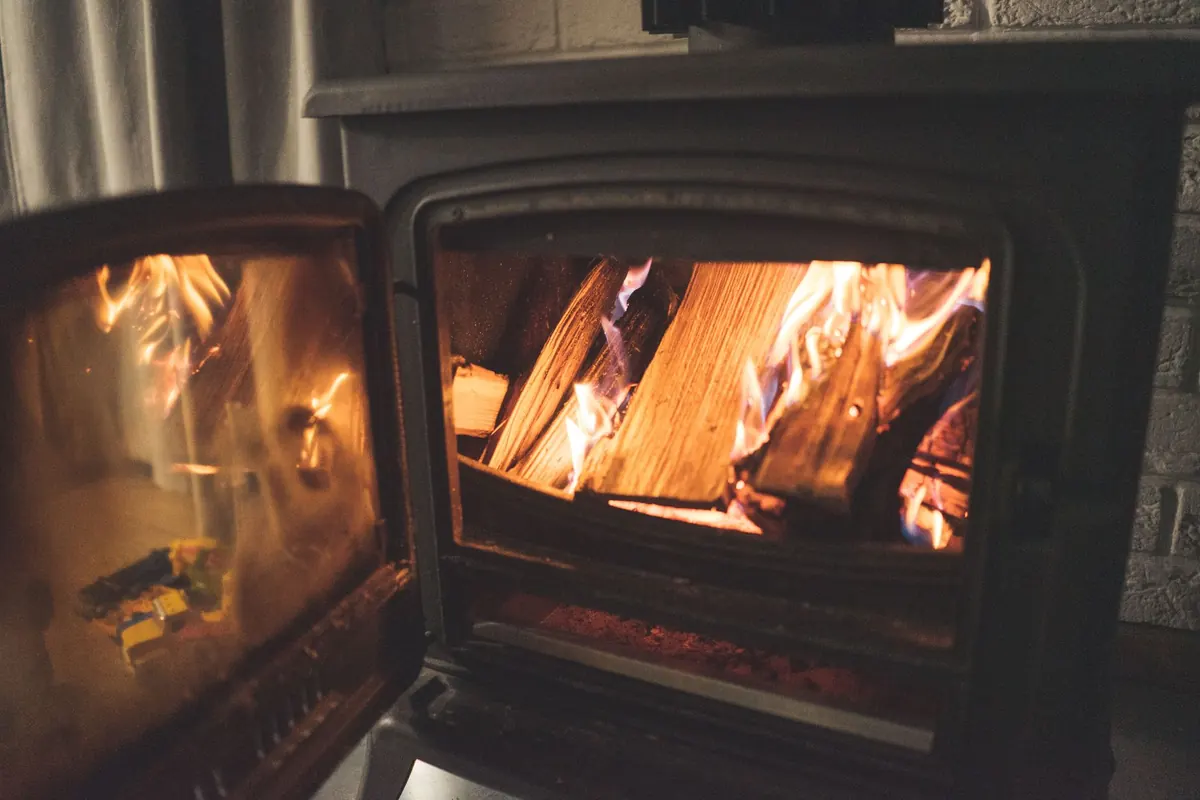
Wood gives you the quickest, liveliest fire and the prettiest flames. It is also the fuel people get wrong most often, almost always because of moisture. Wet wood wastes most of its energy boiling water off, and the resulting steam carries tar and creosote up the flue, where it condenses and sets hard. That is chimney fire fuel.
Logs should be dry and split to a sensible size. Softwoods such as pine and spruce light easily and burn fast, which makes them useful for getting a fire going. Hardwoods like ash, beech, oak and birch hold their shape longer and give a steadier, longer burn.
Checking your logs
A cheap moisture meter takes the guesswork out. Split a log and push the pins into the freshly exposed face — you want a reading under about 20 per cent. Without a meter, two logs knocked together should ring rather than thud, and the end grain should show cracks. Bring logs indoors a day or two before you burn them so they are not icy or damp, but keep it to a day's supply by the stove rather than a fortnight's worth stacked against it.
Smokeless Fuel: The Steady Alternative
Smokeless fuels are manufactured briquettes and anthracite, designed to burn with very little visible smoke. They are the practical choice if you live in a smoke control area, and they are the reason many people choose multi-fuel in the first place. They light more slowly than wood, burn hotter and last considerably longer, which makes them ideal for keeping a stove going overnight.
Start with kindling and a little wood, then add smokeless fuel once you have established embers. It needs air from below, so open the bottom vent and riddle regularly to clear the ash. Smokeless fuel produces far less soot than coal but more ash than wood, so empty the ashpan before it overflows — ideally when the stove is cold.
Coal, and Why It Has Been Pushed Out
House coal is the traditional fuel and it still burns with a deep, long-lasting heat. It is also the dirtiest option: bituminous coal smokes heavily, leaves more ash, and releases sulphur that can attack flue liners and stove internals over time. Burning it is restricted or banned in smoke control areas across the UK, and plenty of stoves are not approved for coal at all. Check the manufacturer's instructions rather than assuming a multi-fuel badge covers it.
If you do burn coal, treat it as a fuel that demands more from the whole system: more frequent sweeping, more ash handling, more attention to ventilation. In most homes a good smokeless fuel does the same job with far less fuss.
Storing Fuel Properly
Storage is unglamorous and makes a bigger difference than most stove accessories.
- Wood: stack it outdoors, off the ground on pallets or a rack, with gaps for air to move through. Cover the top, leave the sides open. A tarpaulin thrown over the whole stack traps moisture and defeats the point.
- Smokeless fuel and coal: keep in a dry shed or bunker, in a lidded metal container. Damp briquettes crumble and burn poorly.
- Ash: never straight into a plastic wheelie bin. Use a metal bucket with a lid and let ash cool for at least a day before disposing of it. In small amounts it is useful on the garden.
- Kindling and firelighters: a sealed box near the stove, kept dry and clear of sparks.
What Not to Burn
Some things will damage your stove, your flue or your neighbours' goodwill. Avoid:
- Wet or green wood
- Treated, painted or varnished timber, and MDF, plywood or chipboard — the glues and coatings release unpleasant compounds when burned
- Household rubbish, plastic, nappies and glossy magazines
- Driftwood, as the salt is corrosive to metal
- Large quantities of cardboard or paper, which flare up and send burning fragments up the flue
- Coal in a wood-only stove, or any fuel your stove's manual does not list
A Few Habits Worth Building
Burn hot and clean rather than slow and smouldering. A smouldering fire produces smoke, tar and very little heat, while a bright fire with visible flame burns off the gases that would otherwise end up as creosote on the flue walls.
Keep the appliance and chimney in good order. Sweep at least once a year, and more often if you burn solid fuel heavily or have had a sooty flue before. Use a registered solid fuel installer for any work on the stove or the liner. Fit a carbon monoxide alarm in the same room as the stove, test it regularly, and keep a ventilation source open if the room needs one.
If you are in a smoke control area, check which fuels and appliances are authorised with your local authority before you buy or burn. And if you are unsure what your stove was designed to take, the manual beats any advice you will find online — including this.
Photo: Mateusz Feliksik / Pexels