Fireplace Accessories Checklist: What You Actually Need
A fireplace earns its keep in small ways. You notice it on a wet Tuesday in February, when the room stops feeling like a room and starts feeling like somewhere you want to stay. What you don't notice, until you're crouched in front of it holding a hot log in one hand and searching for the tongs with the other, is the kit.
Most of what a hearth needs is unglamorous: something to move logs with, something to put ash in, somewhere dry to keep wood. The rest is optional. Here's how to tell the difference before you spend money on things that only look good in photographs.
The Tools You'll Actually Touch Every Week
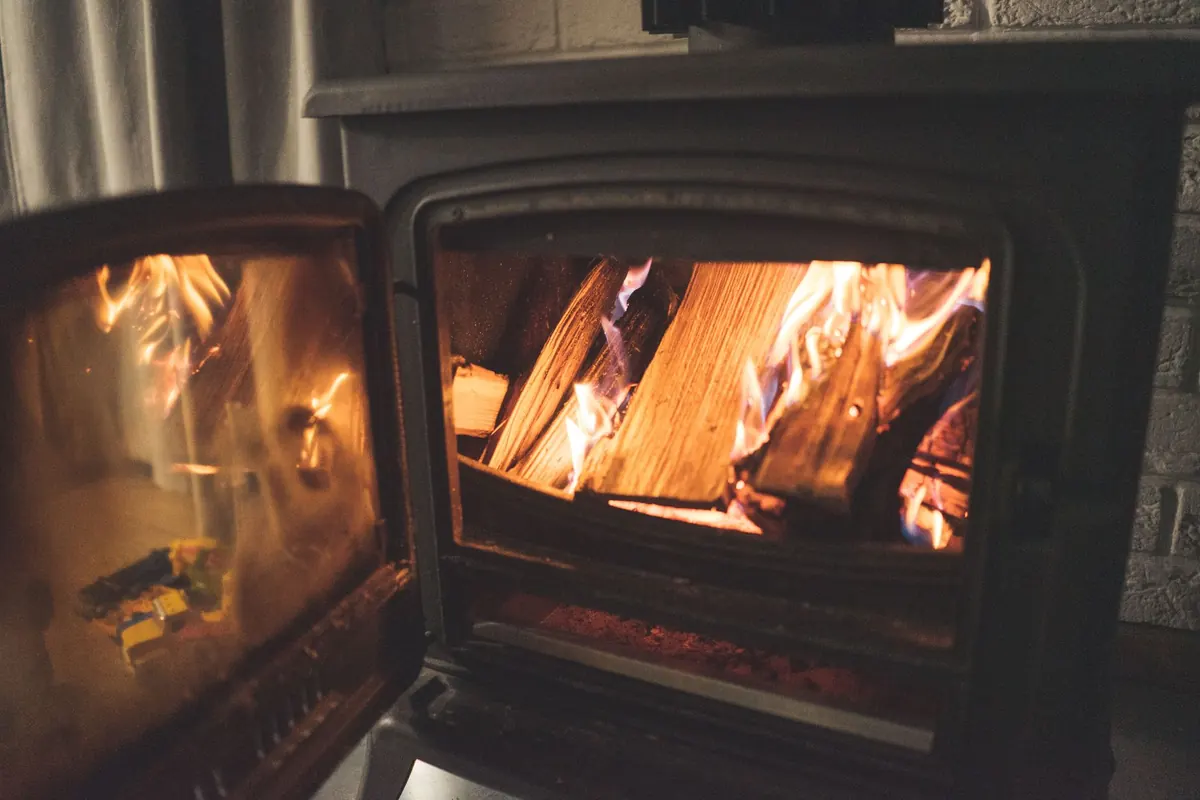
For an open fire, buy a companion set on a stand. For a wood-burning stove, look for a shorter, stubbier version — long handles are awkward in a small firebox and you'll end up holding them at a useless angle.
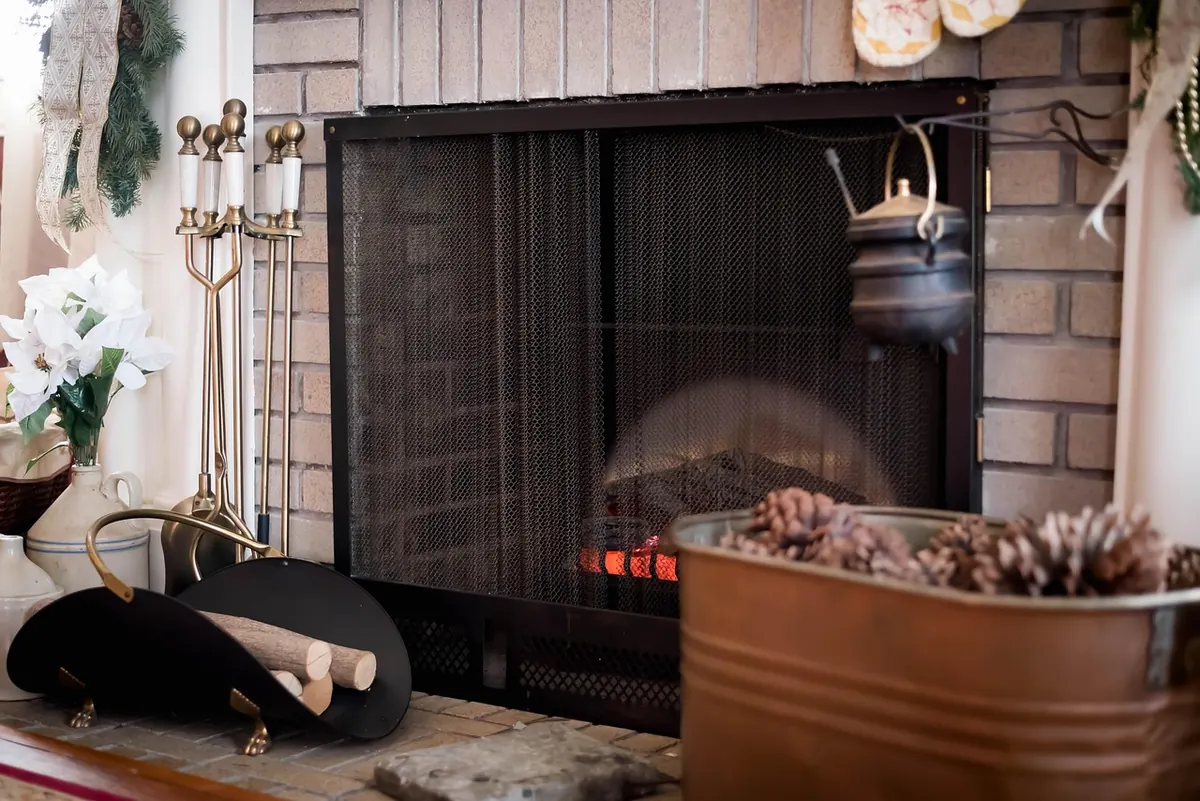
- Poker — to shift logs and break up clinker so air can reach the fuel. A blunt hooked end works better than a sharp spike.
- Tongs — for repositioning a burning log without testing your reflexes.
- Shovel — for lifting ash into a bucket. A deep, slightly curved scoop beats a flat one.
- Brush — for the hearth, not the firebox. Keep it dry and store it a sensible distance from the stove.
- Stand or holder — a small thing with a big effect. Handles that live on the floor get trodden on and bent.
Buy solid metal with a bit of weight behind it. Cheap sets with glued-on handles and thin rods bend the first time you lever a stubborn log, and you buy them again a year later.
Safety Kit: The Bits That Aren't Optional
If you burn anything, fit a carbon monoxide alarm. It should be audible, sited in the same room as the fire, and tested monthly. A smoke alarm on the same floor is standard good practice.
If there are children, pets, or anyone unsteady on their feet in the house, fit a fireguard. Look for one that can be fixed to the wall or weighted so it can't be pulled over, and check it's tall enough to stop a log rolling out onto the hearth. A pair of heatproof gauntlets is worth the few pounds — oven gloves are not the same thing and you will notice the difference.
Chimneys and flues need checking and sweeping by a qualified sweep, typically at least once a year and more often if you burn wood regularly. If you're unsure about your installation, ventilation or what you're allowed to burn where you live, ask a registered installer or sweep rather than guessing.
The ash bucket matters more than you think
Metal, with a tight-fitting lid. Never plastic, and never a bin bag. Embers stay hot far longer than most people expect — a bucket of ash that looks dead can still melt through a plastic wheelie bin overnight. Empty it onto a non-combustible surface outside, away from the house, the shed and anything dry.
Storing Fuel Without Making a Mess
A log store earns its place because it solves two problems at once: it keeps wood dry and it keeps your hallway clear. Raised off the ground, roofed, with open sides so air can move through the stack. If you can, leave a gap between the store and the house wall so damp doesn't track sideways into the brickwork.
Indoors, bring in a day's worth at a time rather than a week's. Cold logs brought into a warm room shed condensation, and bark brings in insects you'd rather not meet.
Dry wood is the whole game. Kiln-dried or properly seasoned is what you want; if you're unsure about a delivery, a cheap moisture meter settles the argument in seconds. The old trick still works too — bang two logs together. A hollow crack means dry, a dull thud means leave it in the store for another season.
What to keep by the hearth
One small basket holding kindling, firelighters or twisted newspaper, long matches or a lighter, and a few logs. That's it. Everything else can live in the log store or a cupboard.
Cleaning and Maintenance
You don't need a cupboard full of products. You need a stiff brush and dustpan, a couple of old towels, rubber gloves, and a proprietary stove glass cleaner. For light sooting on a stove door, a damp cloth dipped in wood ash often lifts it — test a corner first, and never scrub at coated or printed glass.
An ash vacuum is useful if you have one, but only ever for cold ash. Sucking up warm embers will wreck the filter at best and start a fire at worst.
A five-minute weekly routine
- Let the fire die out completely and the ash cool — overnight at least.
- Scoop ash into the metal bucket, leaving a thin layer on the grate if you have one; a bed of ash helps the next fire take.
- Wipe the glass while it's still slightly warm, not hot.
- Check the door seal on a stove by closing it on a strip of paper. If the paper slides out easily, the rope needs attention.
- Take the bucket outside and leave it there.
Nice-to-Have Extras Worth Considering
These are the items that make a hearth more pleasant rather than functional. Buy them one at a time, when you notice you'd use them.
- Bellows — genuinely handy on an open fire, less so on a stove with air controls.
- Log tongs or a canvas carrier — fewer splinters, less mess on the carpet.
- A fire screen — sits alongside a guard and catches spitting on open fires.
- A trivet or stove kettle — adds a little moisture to dry rooms and looks the part.
- Andirons or a fender — decorative, but they do keep logs from rolling forward.
Skip anything fabric, plastic or loosely balanced that would sit on the hearth itself. Novelty pokers, electric flame-effect add-ons and ornaments clustered around an open fire are clutter at best and a hazard at worst.
A Sensible Order to Buy In
- Alarms, and a fireguard if you need one.
- A decent tool set and a metal ash bucket with a lid.
- Dry fuel storage — a log store outside, a small basket inside.
- Cleaning basics: brush, cloths, glass cleaner, gloves.
- Extras, as and when you find yourself wishing for them.
You don't need much to run a fire well. Something to move logs with, somewhere safe for the ash, somewhere dry for the wood, an alarm you actually test, and a guard if there are small hands or paws about. The test for anything else is simple: does it solve a problem you've genuinely had? If you've never once wished for a bellows, don't buy a bellows.
Photo: RVarney / Pixabay