How to Style a Mantelpiece for Autumn and Winter

There is a point in late September when the mantelpiece stops being a shelf and becomes the centre of the room. The lamps go on earlier, the first fire gets lit, and that narrow strip of wood or stone above the hearth is suddenly asked to hold the whole mood together. Get it right and the room feels deliberate before anyone has said a word. Get it wrong and you have a row of objects jostling for space in front of a naked flame.
Start with the fire, not the foliage
Everything on a mantelpiece sits in the hottest, driest, most unpredictable spot in the house, so the first decision is not colour. It is clearance.
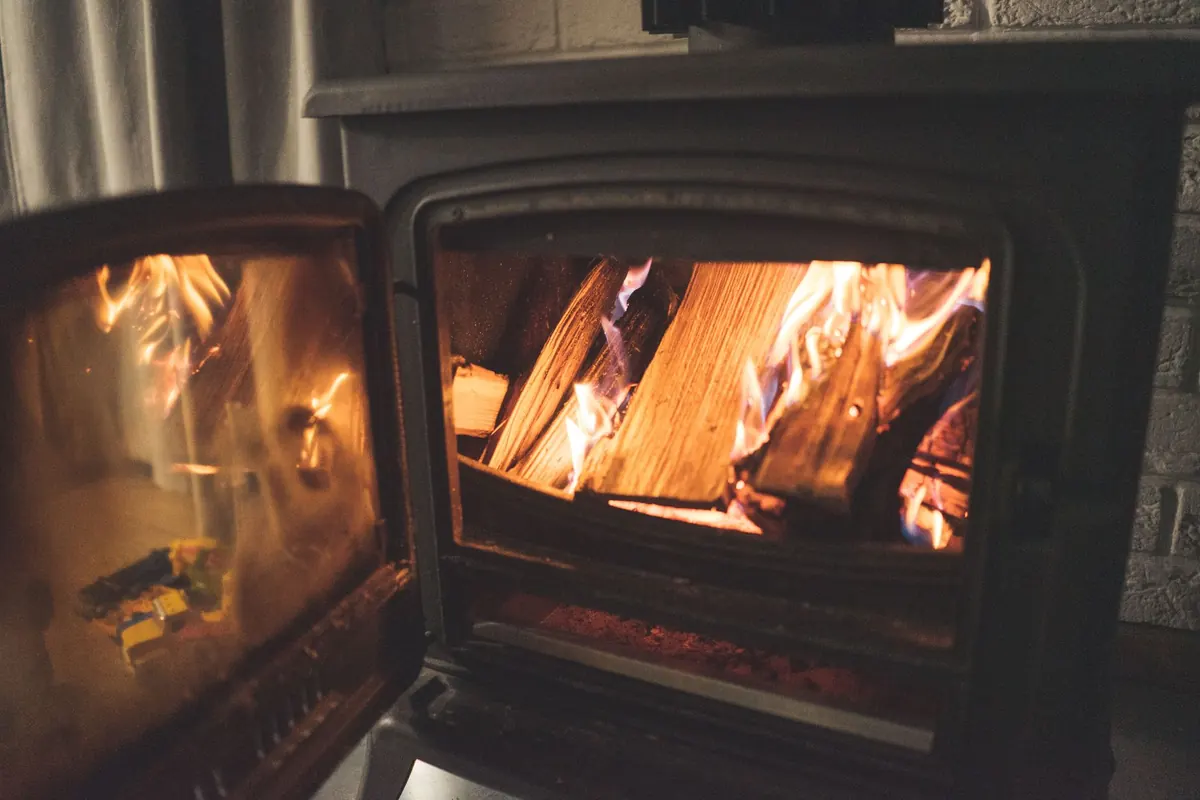
Wood burners, open fires and gas stoves all come with published minimum distances for combustible material. Check the instructions for your own appliance and treat those figures as a floor, not a target to nudge. As a general rule, keep fabric, paper, dried stems and anything loose well away from rising heat, and never let a garland, ribbon or trailing decoration dangle into the fireplace opening. A stocking pinned across a live fire is a photograph, not a plan.
Then there is the shelf itself. A beam above a wood burner can get genuinely warm, so run the back of your hand over the surface before you commit a pillar candle to it. If it is too hot to rest your hand on comfortably, it is too hot for wax, dried flowers or anything you would be sorry to lose. Remember, too, that a candle on a mantelpiece sits directly beneath whatever hangs above it; heat travels upwards, so leave a generous gap between a flame and the bottom edge of a frame or mirror.
Decide what goes on the wall first
The wall above the mantelpiece sets the tone for everything else, and it is the part most people leave empty. A mirror is the classic choice for good reason: it doubles candlelight, bounces a grey afternoon back into the room and makes a narrow chimney breast feel wider. Hang it centred on the fireplace rather than centred on the wall, with the bottom edge clearing your tallest candlestick by a comfortable margin.
If you would rather have art, go darker and warmer than you would in summer — a low-lit landscape, a moody still life, a framed etching in an aged gold or black frame. A cluster of three small prints hung close together reads better than one timid picture floating on a large wall. And if a mirror simply throws the fire's glare straight at your chair, swap it for something with a matte surface; no amount of styling is worth squinting all evening.
Candles: light, height and a little discipline
Candles do more for a winter mantelpiece than anything else you can buy. Group them rather than spacing them out evenly — three or five, at different heights, with the tallest at the ends or just off-centre. A row of identical tea lights can look wonderful, but only if the row is straight and the holders match.
- Choose stable, solid holders. A glass hurricane, a wide ceramic dish or a brass candlestick with a heavy base means wax cannot run onto wood or stone.
- Trim wicks to about 5mm before lighting. Untrimmed wicks smoke, and smoke marks a pale wall above a mantelpiece faster than anything else.
- Keep flames out of draughts. A candle next to a chimney that pulls hard will lean, sputter and leave a soot line.
- Mix in battery candles on a timer. For the dark hours before anyone is home, they are genuinely useful and nobody minds the company they keep.
- Never leave a real flame unattended, and never settle down for a nap with one burning behind you.
Greenery: fresh where you can, dried with care
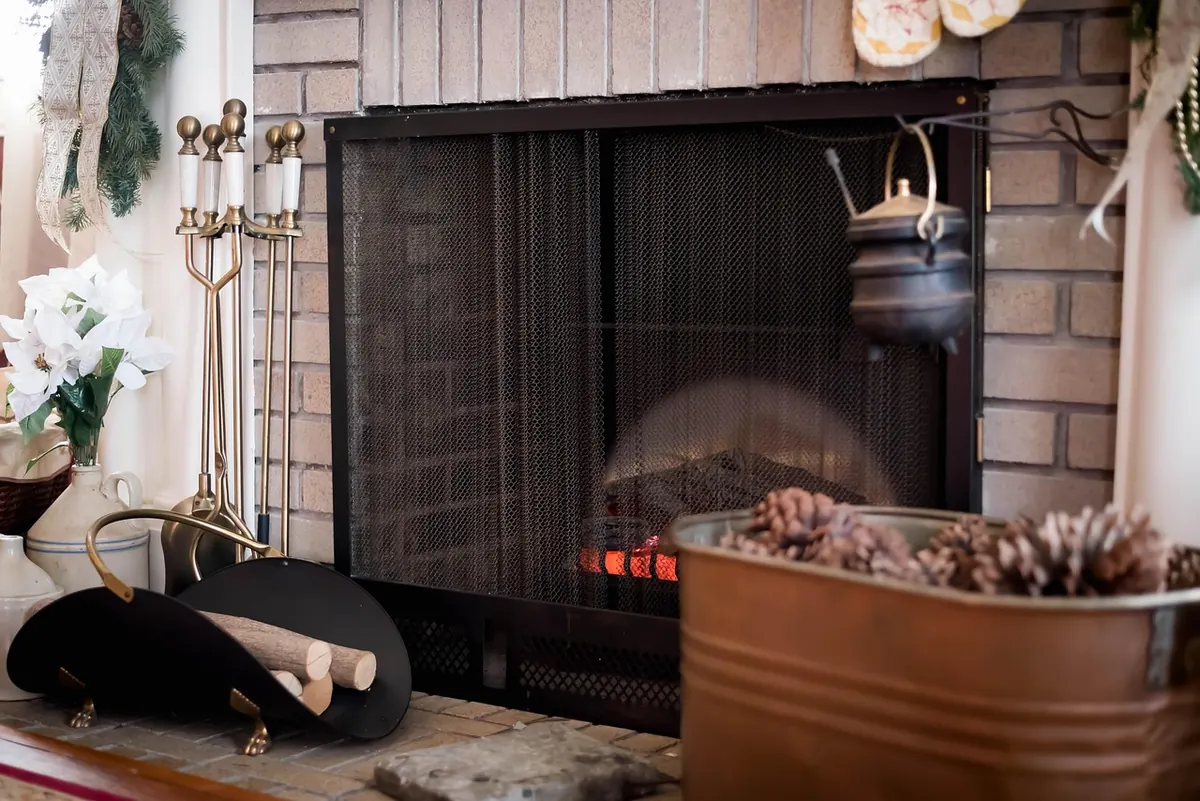
Greenery gives a mantelpiece its season. In autumn, think dried hydrangea heads, wheat, seed heads, rosehips, bracken and eucalyptus in an amber bottle. As December approaches, move to conifer, ivy, bay, rosemary, holly and the odd sprig of something silvery.
Fresh conifer is the better choice near a fire, but it dries quickly indoors. Keep stems in water, mist them, and replace them once needles start dropping — at that point you are decorating with tinder. Dried material, however beautiful, belongs at the far ends of the shelf and away from the firebox entirely. The same goes for dried orange slices and anything else that has been through an oven. If you want volume in the middle, a potted cyclamen, a small ivy or a bowl of forced bulbs will last longer and cause you far less worry.
Books, objects and the three-layer trick
Once the wall and the light are sorted, the shelf itself needs layers rather than a row. Think of it as three depths: tall and vertical at the back, medium in the middle, small and loose at the front.
At the back, tall candlesticks, a slim vase or a leaning frame. In the middle, a stack of books laid flat and topped with a small brass animal or a stoneware dish, or a bowl that picks up the colour of the wall. Up front, two or three small things — a sprig in a tiny bottle, a single tea light, a smooth pebble. On a mantelpiece of about a metre and a half, five objects is plenty. Seven is a jumble.
Choose books with muted spines or a rough linen cover, and resist the urge to fill every gap. Texture matters more than quantity: wool, aged brass, unglazed ceramic, dark wood, one thing that is slightly imperfect. Add a single warm metal accent and let the rest stay quiet.
Moving from autumn into winter
Late September to November suits rust, ochre, amber glass and brown paper tones — nothing too shiny yet. In December, deepen everything: dark green foliage, ivory candles, red only where you mean it. Then, in January, strip it back. Keep the greenery and the candlelight, remove the festive red, and add pale wood, white candles and a few snowdrops in a small pot. A mantelpiece that changes twice a season feels cared for; one that stays the same from October to March starts to look like storage.
A five-minute reset
Before you light anything, run through this. It takes less time than reading it.
- Feel the shelf. If it is hot, clear it.
- Check the clearance around your fire or stove against the manufacturer's instructions.
- Trim wicks, replace spent candles and scrape up any wax while it is still soft.
- Dust the shelf and the wall behind it — soot and dust show up badly in low winter light.
- Stand in the doorway and look. If it reads as busy, take one thing off.
Do that and the mantelpiece will carry the room from the first cold evening through to the last one, without ever putting the fire or the furniture at risk.
Photo: NoName_13 / Pixabay